20 July 2023
A mapping of literary translation residencies in Europe
Sladjana Nina Perković in POETEKA - Tirana in Between: "In the Ditch" excerpt
* * *
I had to go halfway across town. We usually pay the bills for our apartment—you know the ones, electric power, trash removal, heat, the cable connection, and so forth—at a bank in our neighborhood, but their system crashed or whatever and they sent me to their main office in another part of town. So, off I went across town, walked into the bank, and there were more people there than at a soccer stadium during the World Cup finals. And to make matters worse, of the seven teller windows, only three were working, and so many people were cutting in that there was no telling where a line began and where it ended. The bank's number dispenser, the one upon which civilization relies, broke down, resulting in a real case of gridlock. People were breathing down each other's necks and swearing under their breath, bristling with hatred. "I gave birth to three children and worked till the last day with my belly up to my chin, but ladies these days seem so helpless", hissed a woman with highly teased bangs when we let a pregnant woman cut in front of us in line. And then another woman nearly had a nervous breakdown when she saw them letting in a man in a wheelchair. "But he's in a wheelchair. He's sitting. Why him? I'm so much worse off with my varicose veins!" People began to fidget, and a fight nearly broke out, but then a bald security guy showed up, and, calling us "uncultured livestock", organized us into two lines, because, meanwhile, the third window had closed. The teller had gone off, no doubt, for her hard-earned break. It was, of course, my lot to wait in the line that moved much more slowly. At one point I remembered a cartoon in which Gustav is working as a bank teller and has a glass of red wine hidden under the counter. So first he dips his finger in the wine, then licks it and turns the page. I thought of the likelihood that these tellers were doing the same and my lips spread in a silly grin. Smiles in the line for paying bills, however, were such an unnatural and suspicious thing that the security guy, that same baldy, shot me one of those sideways glances, like "What have you got to grin about, kid", and in an instant all trace of the smile on my face was gone. After that I just waited, huffing and puffing like everyone else. When my turn finally came and the teller greedily snatched the money from my hand, I felt pleased and satisfied. The torture was over. I was free, at least until next month.
Outside I was greeted by rain. I had no umbrella, though I couldn't believe I'd forgotten it. For the last two months, rain had been falling every godforsaken day. My umbrella had become an extension of my arm. Whatever. When I finally got home, I was soaked through and through. Even my ankle boots were drenched. I turned the key quietly in the lock and slipped into the front hall. The pressure cooker sound came from the kitchen. Mama was cooking beans and didn't hear me. I slowly peeled off my ankle boots and my soaking-wet socks and tiptoed into my room. I put my socks on the radiator to dry, though there was no heat, because, as usual, the city heating system was on the blink, slipped in under my coverlet, and turned on the television. For two hundred and fifty thousand monthly payments my folks recently bought a television set with a 40-inch screen at the huge shopping center that sprouted up on the site of Dad's former, not to call it "late great", factory, and I inherited their old one, which wasn't at all bad. And, better yet, I was there in the nick of time. My favorite detective show was just starting.
It has been like three years that I haven't been up to much but lying around in bed and watching detective shows. I don't know how else to describe the mood I'm in, except that my organism sank into a state of general lethargy. My boyfriend—and we were together for absolutely ever, you know what I mean, like since tenth grade—was sent a letter of guarantee by his aunt in Sydney, and off he went. The idea was that he'd take care of my paperwork and I'd join him, but Mama almost had a seizure when she heard. "Do you even know where Australia is?" she foamed at the mouth. I know perfectly well where Australia is. There'd be at least three lightyears between me and Mama. But don't get me wrong. It's not Mama's fault that I didn't go. What happened is that my boyfriend sent me a postcard when he got to Australia. He wrote, "This is a country with great possibilities", and then he vanished along with all the possibilities. He neglected to write anymore. I kept a close eye on his Facebook posts. Him holding a crocodile by the tail. Him sunbathing on a beach. Him slathering on yogurt he'd bought at a Bulgarian market to treat his sunburn. Him eating Yugo-Smoki peanut puffs to ease his nostalgia. Him tucking a bill between the breasts of a singer at a nightclub. And then one morning, when I was sitting on the john and frantically scrolling through social media, my phone fell out of my hand, straight onto the floor tiles. The screen cracked. The man behind the counter at the mobile phone repair service said the repair would cost more than a new phone and he gestured to a glass case where Chinese smartphones were on display. "They don't cost much and they work just fine", he said and went on talking about how they make these phones at the same factories, using the same parts, as the iPhone. I looked at the man behind the counter and said, "But I don't want a new phone". He rolled his eyes and said that if I insisted, he could order a new screen for my phone. Then I broke down completely. "But I don't want any sort of phone at all". And from that moment, on, I didn't want anything and that's how I sank into the state I already mentioned. The only thing I still wanted was to be in my bed, watching detective shows. That was the only thing that made me happy.
Of course, my happiness didn't last long. Mama had already sniffed me out. Exactly one second before Detective Frost would uncover the murderer, she charged into the room, completely blocking my view of the screen. She looked pretty upset. I didn't catch on right away to what was going on, because her arms were flailing and she was talking really fast. When she saw that all I could do was stare at her, she stopped, took a breath, and repeated everything. Aunt Stana had choked on a mouthful of chicken. Uncle Radomir found her on the kitchen floor, all blue, her eyes bugging out. With her fingernails, she'd nearly clawed away her whole throat. In her desire to convey the scene as faithfully as possible, Mama grabbed herself by the throat with both hands. She stuck out her tongue and rolled her eyes.
I had no chance to catch who the murderer was. When Mama finally stepped away from the television screen, the credits were already rolling by.
"Awful", I huffed, grumpy, thinking of the detective show that had just finished. I suspected the murderer was the little old lady who'd been raising pigeons, but maybe not. Sometimes they tangle the story up so much that right to the end you can't say with certainty who the murderer is. That is why I love the British detective shows. The newer American ones, where the main detective uses expensive laboratory tests that can take them from a mote of dust to the killer instead of relying on brains and intuition, are sheer idiocy. Though I watch them, too, but only when there's nothing else on.
" Awful. And awfuller than awful!" Mama repeated and added, "The funeral is tomorrow at the village graveyard".
"Tomorrow", I said absentmindedly, while trying to recall the schedule for when the episode would be rerun tomorrow.
"It has to be tomorrow. They have no mortuary in the village so they have to bury the dead right away. What a blessing in disguise that she choked to death now that the cold weather is here. Imagine this in the middle of a summer heatwave". Mama shuddered at the very thought of the deceased, mid-heatwave.
"Awful", I continued staring, disinterested, at the television screen at a toothpaste ad.
"What have you got to wear? Let me see if there's anything halfway decent in here", Mama opened my closet and thrust her head in among the clothes. There were all sorts of things from pink flannel pajamas that I have worn since I was ten, to plaid shirts, a total disaster, bought in my appalling and confusing teen phase, and all the way to the old washed-out t-shirts and sweat pants for "around the house". There wasn't a stitch of serious, halfway-decent clothing. Or at least I'd never been able to dig up something like that. The closet was in such disarray that I was even a little alarmed to push my head in so I generally wore the two or three shirts that were right on top.
"To wear?" I blinked.
"Well, you must have something suitable for a funeral. I hope you're not planning to go in jeans and this red blouse!" Mama wriggled out of the closet and quickly put back a lipstick-red silk blouse she'd worn back in the 1980s. She generally hated those years of her life and tried to erase them by ripping up all the pictures on which she struck cheery poses, with all sorts of war paint smeared over her face and shoulder padding worthy of one of Napoleon's officers. The lipstick-red blouse was the sole item to survive the hell of the Inquisition. Probably because it ended up, by mistake, among my stuff.
"Why've I got to go? Can't you go by yourself?" I jumped off the bed as if scalded. If there was anything I hated, it was her making me go to funerals. Old lady Smilja's maid-of-honor died and we're going to the funeral, our first-floor neighbor's cousin died. People were non-stop dying of cancer, bee stings, tiger mosquitoes, ticks, rare auto-immune disorders, cardiac arrest, strokes, mouse fever, alcoholism, but also traffic accidents, wars, and sometimes even old age. So we were forever going to somebody's funeral. Proportionately far more than weddings, showers, saints' days, and other festivities.
"Don't be a spoiled brat!" Mama rolled her eyes. "And besides, I'm not going. You're going alone".
Translated from Bosnian by Ellen Elias-Bursać
____________
Sladjana Nina Perkovic (1981) is a Franco-Bosnian journalist and a fiction writer. After finishing her studies in Political Sciences at the University of Paris 1 Panthéon-Sorbonne, she mainly worked as a news correspondent for media outlets in ex-Yugoslavia. Her work has also been featured in many European news outlets such as The Guardian. Today, Sladjana is mostly committed to her writing career. She has published a collection of short stories "Kuhanje" ("Cooking") and the novel "U jarku" ("In the Ditch"). "U jarku" was listed for the 2021 NIN Award, the "Meša Selimović" Award and it was awarded as the EUPL 2022 special mention. She lives, works, and writes in between Banja Luka and Paris.
13 July 2023
10 vjet Rezidenca "POETEKA - TIRANA IN BETWEEN": shkrimtarët - përkthyesit dhe artistët pjesëmarrës
2023
Sladjana Nina Perković - Bosnia and Herzegovina / France
Laura Freudenthaler – Austria
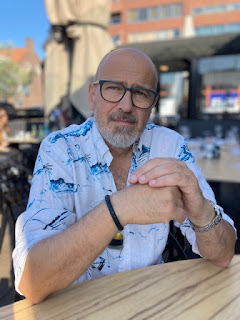
Damir Šodan – Kroaci / Netherlands
2022
Petar Denchev - Bulgaria
Adina Popescu - Romania
Vanja Šunjić - Bosnia and Herzegovina
Rigels Halili – Albania / Poland
Cord Pagenstecher - Germany
Evelyne Noygues - France
2021
Eleana Zhako – Albania / Belgium
Zuzana Finger – Germany
Neđad Ibrahimović – Bosnia and Herzegovina
Sonja Porle – Slovenia
Maria Dragnić – Montenegro
2020
Sasho Ognenovski – North Macedonia
Nataša Sardžoska – North Macedonia
Petar Andonvski – North Macedonia
2019
Robert Menasse – Austria
Alen Brlek – Croatia
Vitomirka Trbovac – Serbia
Marko Tomaš – Bosnia and Herzegovina
2018
Erwin Einzinger – Austria
Miroslav Čurćić – Serbia
Sandra Hoffmann – Germany
Marko Pogačar – Croatia
Lidija Dimkovska – North Macedonia
Emina Žuna – Bosnia and Herzegovina
Barnara Korun – Slovenia
2017
Shpëtim Selmani – Kos ova
Jasna Dimitrijević – Serbia
Gašper Malej – Slovenia
Daim Miftari – Macedonia
Jasna Šamić – Bosnia and Herzegovina
2016
Petra Rosandić – Croatia
Ervina Halili – Kosova
Dorian Steinhoff – Germany
Dejan Čančarević – Serbia
Christian Thanhauser – Austria
Bogomil Gjuzel – Macedonia
Ilija Đurović – Montenegro
Zuzana Finger – Germany
2015
Elena Prendjova – Macedonia
Dušan Čater – Slovenia
Bojan Krivokapić – Serbia
Dan Coman – Romania
Karen Köhler – Germany
Daša Drndić – Croatia
Dragana Tripković – Montenegro
2014
Luan Starova – North Macedonia
Barbara Pogačnik – Slovenia
Srdjan Srdić – Serbia
Robert Perišić – Croatia
Olya Stoyanova – Bulgaria
Jovan Nikolaidis – Montenegro
2013
Nikola Madzirov – North Macedonia
Tanja Bakić - Montenegro
Jasmina Topić - Serbia
12 July 2023
POETEKA NË HARTËN E REZIDENCAVE TË PËRKTHIMIT LETRAR NË EUROPË
Publikohet Harta e Rezidencave të Përkthimit Letrar në Europë (A Mapping of Literary Translation Residencies in Europe), në të cilën zë vend edhe Rezidenca "POETEKA - Tirana in Between", si një nga projektet kryesore të shoqatës POETEKA, përmes së cilës realizohet Programi Rezidencial për Shkrimtarë, Përkthyes Letrarë dhe Artistë.
Që nga themelimi i saj, në vitin 2013, kjo Rezidencë ka pritur dhe ka organizuar veprimtari për 58 shkrimtarë, përkthyes letrarë dhe artistë, duke u bërë një hapësirë unike në Shqipëri për shkrimtarët, përkthyesit dhe artistët e vendeve të BE-së dhe rajonit të Ballkanit Perëndimor.
Botimi Harta e Rezidencave të Përkthimit Letrar në Europë ofron një pasqyrë të rezidencave duke u thelluar në çështjet lidhur me krijimin, vendndodhjen, veprimtarinë, kriteret e përzgjedhjes së pjesemarrësve në këto rezidenca dhe financimin, duke theksuar rolin e tyre në promovimin e shkëmbimit kulturor dhe mbështetjen e përkthimit letrar.
Tipologjia e paraqitur në këtë botim i ndihmon përkthyesit të përcaktojnë pritshmëritë dhe qëllimet e tyre, duke marrë parasysh faktorë të tillë si shkëmbimi kulturor, përmirësimi i aftësive gjuhësore dhe mundësitë e rrjetëzimit.
Rastet studimore ilustrojnë qasjet dhe burimet e ndryshme të mbështetjes financiare të përfshira në krijimin e programeve të rezidencave. Në këtë botim, theksohet rëndësia e rrjeteve rajonale dhe e bashkëpunimeve ndërkufitare për rritjen e dukshmërisë dhe lehtësimin e përkthimit ndërmjet vendeve fqinje.
Gjithashtu, aty diskutohen sfidat me të cilat përballen rezidencat, duke përfshirë nevojën për përditësime, mirëmbajtje dhe rishikim të programeve të disponueshme për shkak të ndryshimit të mundësive të financimit. Aty përfshihet dhe projekti "Translation in Motion", i bashkëfinancuar nga programi Europa Krijuese, i cili ofron rezidenca përkthimi për gjuhët e Ballkanit Perëndimor në shumë qendra evropiane.
Botimi në fjalë ofron njohuri të vlefshme për peizazhin e rezidencave të përkthimit letrar në Evropë, duke shërbyer si një burim për përkthyesit, organizatat kulturore dhe institucionet e interesuara për të krijuar ose marrë pjesë në programe të tilla.
"Harta e Rezidencave të përkthimit letrar në Europë", botuar në kuadër të projektit Translation in Motion hedh dritë mbi shumëllojshmërinë e modeleve organizative dhe financuese dhe do të frymëzojë organizata të tjera, politikëbërësit dhe aktivistët kulturorë.
Projekti Translation in Motion (1/2/21-31/8/23) bashkëfinancohet nga programi Evropa Krijuese e Bashkimit Evropian.
#CreativeEurope4Books
__________________
The publication Mapping of Literary Translation Residencies in Europe provides a comprehensive overview of literary translation residencies in Europe. It delves into the establishment, funding, location, amenities, and selection criteria for these residencies, highlighting their role in promoting cultural exchange and supporting literary translation. The typology presented in the document helps translators define their expectations and goals for a residency, considering factors such as collegial exchange, language skills enhancement, and networking opportunities.
Case studies and founding stories of various residency centers across European countries illustrate the diverse approaches and funding sources involved in establishing these programs. The importance of regional networks and cross-border collaborations for enhancing visibility and facilitating translation between neighboring countries is emphasized.
The document also discusses the challenges faced by residency centers, including the need for regular updates and review of available programs due to changing funding opportunities. It mentions the Translation in Motion project, co-funded by the Creative Europe program, which offers translation residencies for languages of the Western Balkans in multiple European centers.
Overall, the document provides valuable insights into the landscape of literary translation residencies in Europe, serving as a resource for translators, cultural organizations, and institutions interested in establishing or participating in such programs.
The Mapping of Literary Translation Residencies in Europe, produced within the Translation in Motion project sheds light on the variety of organizational and funding models and will inspire other organisations, policymakers, and cultural activists.
Translation in Motion project (1/2/21-31/8/23) is co-funded by the Creative Europe program of the European Union.
30 June 2023
Sladjana Nina Perković në rezidencën letrare "POETEKA - Tirana in Between".
Në muajin korrik shkrimtarja franko-boshnjake Sladjana Nina Perković do të qëndrojë në Tiranë për të realizuar një programin e saj të pasur kulturor, si fituese e bursës për autorët në redidencë, mbështetur nga TRADUKI dhe realizuar prej 10 vjetësh nga shoqata POETEKA.
Sladjana Nina Perković (1981) është shkrimtare dhe gazetare, autore e vlerësuar e prozës fiction, e cila është e njohur për tregimet dhe romanet e saj. Pas përfundimit të studimeve për Shkenca Politike në Paris (Panthéon-Sorbonne - Univ. Paris 1), ajo punoi kryesisht si korrespondente lajmesh për mediat në ish-Jugosllavi, por kontributi i saj është bërë e njohur ndërkombtarisht përmes paraqitjes në shumë media europiane si në "The Guardian" apo "Today".
Pa lënë mënjanë gazetarinë, Sladjana Nina Perković i është kushtuar në mënyrë të posaçme karrierës së saj si shkrimtare. Në pesë vitet e fundit ajo ka botuar përmbledhjen me tregime "Kuhanje" dhe romanin "U jarku", vepër kjo që u kandidua për çmimin e lartë letrar NIN 2021 si dhe për çmimin e mirënjohur "Meša Selimović ". Ky roman u vlerësua si prurja speciale e EUPL 2022 (The European Union Prize for Literature).
Sladjana Nina Perković jeton, punon dhe shkruan mes Banja Lukës dhe Parisit.
BIBLIOGRAFIA:
"KUHANJE", përmbledhje tregimesh, "Booka", Beograd, 2018;
"U JARKU", roman, Imprimatur, Banja Luka, 2020.
"POETEKA - Tirana in Between" është një nga projektet kryesore të shoqatës POETEKA, përmes së cilës realizohet Programi Rezidencial për Shkrimtarë, Përkthyes Letrarë dhe Artistë. Që nga themelimi i saj, në vitin 2013, kjo rezidencë pritur më 58 shkrimtarë, përkthyes letrarë. , dhe artistët, duke u bërë një hapësirë unike në Shqipëri për shkrimtarët, përkthyesit dhe artistët e vendeve të BE-së dhe rajonit të Ballkanit Perëndimor.
Programi "POETEKA - Tirana in Between" është zbatuar në kuadër të projekteve "Reading Balkans" dhe "Translation in Motion" të bashkëfinancuar nga TRADUKI, rrjeti europian për letërsinë dhe librat dhe Programi i "Europës Krijuese" të Bashkimit Evropian, si dhe nga Ambasada. të Gjermanisë, Goethe Zentrum Tirana, Ambasada e Austrisë dhe Ministria e Kulturës së Shqipërisë. Së fundmi, "POETEKA - Tirana in Between" është përfshirë në Hartën e Rrjetit Evropian të Rezidencave të Përkthimeve Letrare (RECIT – Réseau Européen des Centres de Traducteurs).
26 June 2023
DAMIR ŠODAN - POETEKA - Tirana in Between - A Farewell Meeting
Rezidenca "POETEKA - Tirana in Between" është një hapësirë kulturore për shkrimtarët, përkthyesit letrarë dhe artististët nga BE dhe Europa Juglindore e cila, në bashkëpunim me rrjetin TRADUKI, Creative Europe, Goethe Zentrum, Ambasadën e Gjermanisë, Austrisë dhe partnerëve të tjerë, zhvillon prej dhjetë vitesh veprimtari në Tiranë, duke krijuar mundësi pune për 58 autorët e ftuar dhe kontakte bashkëpunuese mes kulturave.
Në vijim poezi në 3 gjuhë (shqip/kroatisht/anglisht).
TUNDIMI I SHËN ANTONIT
tanimë e di se forca
e cila kuajve të harbuar
ua shtrëngonte këmbët fort
që moti ka pushuar në mitrën
e kryqëzimit të fshatit.
por njeriu është i verbër
teksa ëndërron futbollin
dhe i lëshon lakuriqët t'i zbresin
mbi supet e ngushta të rekrutit.
nëse do të dish
diçka për religjionin
duhet të provosh më parë
seks në eks(tazë),
me gjimnaziste të moshës së mesme,
Testamentin e Vjetër ose kërcimin bungee.
diçka të marrë, kryesisht.
Dalí e kuptoi menjëherë.
sigurisht që Zoti nuk ekziston
teksa gjunjëzohesh
para bankomatit.
POEZIA NË NJË GJUHË TË VOGËL
Kork, Irlandë
Poezia e një gjuhe të vogël
është si një zile
në një fshat të largët
që mbrëmjeve rreh mbytas
përmes lagështisë së provincës
e vetëharruar
dhe mjaft e vetëkënaqur
- mund të thuhet -
Po të mos ishin ato delet e leckosura
Grumbulluar në vathë para shiut rrebesh
përballë stallës me gurë
pak nga pak,
ato tundin kokat e bardha
për të ta bërë me dije
se pavarësisht medias
porosia gjithnjë
arrin në cak.
NË TREN PËR NË KASHAISH
në trenin për në Kashaish
pa vajzën më të bukur.
lëkurë ulliri
dhe gjinjtë e rrumbullakët
(si Ornela Muti)
kishte një T-shirt
Dolce & Gabbana
dhe qëndrimin e Theresa Avilskës
duke soditur shtizën
me të cilën gjuetari saj
etj
por mbase e refuzoi
Biografia e Wittgensteinit
në duart e tua,
sepse befas u ngrit
dhe doli në Estoril,
e ti vazhdove për në Kashaish
me bindjen e trishtë
se të iku prej dore
gruaja e jetës tënde
(ose dikujt tjetër):
Atlantidase e bukur
si trupi i dialektit të saj të pakapshëm
i lëngshëm dhe shushuritës
si ajo samba
asaj vere në Bohinj
kur ishte tetëmbëdhjetë vjeç.
dhe çfarë mund të bëje?
vazhdove ta lexosh atë libër të mallkuar
me njohjen e hidhur
se janë kufijtë e gjuhës tënde
por edhe kufijtë e botës tënde,
që është e gjitha një rastësi,
si kjo
që as i vdekuri nuk do të heshtte.
Përktheu nga origjinali kroatisht: Lulzim Haziri
________________
DAMIR ŠODAN
Iskušenje Sv. Antuna
sad znaš da je sila
koja je onim razuzdanim konjima
tako napasno istezala noge
počivala još davno u utrobi
seoskog raspela.
ali čovjek je slijep
dok sanja nogomet
i pušta šišmiše da mu slijeću
na uska regrutska ramena.
ako poželiš znati
nešto o religiji
moraš prije toga probati
seks na exu,
sredovječne gimnazijalke,
Stari zavjet ili bungee jumping.
uglavnom, nešto malo
pomaknuto.
Dalí je to odmah znao.
naravno da ne postoji Bog
dok klečiš
ispred mašine za novac.
Poezija u malom jeziku
Cork, Irska
poezija u malom jeziku
je kao zvono
u zabačenom selu
što tuče muklo s večeri
kroz memlu provincije
samozaboravno
i poprilično samodovoljno
- reklo bi se -
da nije tih par kuštravih ovaca
skutrenih pred pljusak
u oboru
ispred kamene pojate
što malo-malo
trznu bjelkastim glavama
da ti daju do znanja
da bez obzira na medij
poruka uvijek
stiže na odredište.
U vlaku za Cascais
u vlaku za Cascais
vidio si najljepšu djevojku.
maslinaste puti
i oblih grudi
(poput Ornelle Muti)
imala je majicu
Dolce & Gabbana
i držanje Tereze Avilske
dok kontemplira koplje
kojom će je njezin kopljonoša
itd.
ali mora da ju je odbila
Wittgensteinova biografija
u tvojim rukama,
jer najednom se digla
i izašla u Estorilu,
a ti produžio za Cascais
s tužnim uvjerenjem
da si možda propustio
ženu svog
(ili barem nečijeg)
života:
Atlantiđanku lijepu
kao tijelo njenog neuhvatljivog narječja,
sočno i šuškavo
poput one sambe
onog ljeta na Bohinju
kad ti je bilo osamnaest godina.
i što si mogao?
nastavio si čitati tu prokletu knjigu
s gorkom spoznajom
da su granice tvog jezika ipak
i granice tvog svijeta,
koji je sve što je i slučaj.
poput ovog
što ga ni mrtav ne bi prešutio.
____________
DAMIR ŠODAN
The Temptation of St. Anthony
now you know that the force
that stretched the legs of those horses
so unrelentingly
once rested in the belly
of the village crucifix.
but man is blind
as he dreams of soccer
allowing fluttering bats to land
on his narrow soldierly shoulders.
if you wish to know
something about religion
you must first try
sex on X,
middle-aged prom queens,
the Old Testament or bungee jumping.
generally speaking: something a little
twisted.
Dalí knew that from the beginning.
of course, there is no God
when you're kneeling
below a cash machine.
Poetry In Small Language
Cork, Ireland
is like a church bell
in some remote village
tolling mutely in the evening
through the musty provincial air
self-obliviously
and quite self-sufficiently
- one might add -
if it weren't for the pair of those
ragged sheep
huddled before the rain
on the empty lot
in front of a stone barn
bobbing their whitish little heads
up and down
just to let you know
that regardless of medium
the message will always
arrive at the destination.
On the Train to Cascais
on the train to Cascais
you saw the most beautiful girl.
with olive skin
and round breasts
(just like Ornella Muti's)
wearing a T-shirt
by Dolce & Gabbana,
poised like St. Theresa of Avila
contemplating that spear
about to pierce her chest
etc.
she must have been put off
by the Wittgenstein's biography
in your hands, for she suddenly
sprung up and exited
in Estoril,
as you continued to Cascais
with the sad realisation
that you'd just missed
the woman of your (or somebody
else's) life:
an Atlantean as beautiful
as the body of her slippery language,
juicy and rustling
like the samba
you heard that summer
on the lake of Bohinj
when you were eighteen.
so what choice did you have,
but to continue reading that damn book
bitter in the knowledge
that the limits of your language
are indeed the limits of your world
that is the case;
much like this one
whereof you wouldn't want to be silent;
not even in death.